SPECIALTIES
Missouri Technology Errors and Omissions Insurance
A single software bug can cost a Missouri technology firm more than the contract was worth. When a client's system goes down because your code failed to perform as specified, the resulting claim can include lost revenue, regulatory penalties, and legal fees that dwarf the original project scope. Technology errors and omissions insurance exists to absorb that financial exposure, but most policies are not identical, and the gaps between them matter. Missouri's tech corridors in St. Louis, Kansas City, and Springfield each carry distinct risk profiles shaped by the industries they serve, the contracts they sign, and the regulatory frameworks they operate under. Whether you are a 15-person SaaS shop in the Cortex Innovation District or a managed services provider supporting healthcare clients in Springfield, the policy form you select will determine whether a claim triggers a defense or a denial. This guide breaks down failure-to-perform claims, negligent software development coverage, policy limits, and the specific considerations Missouri tech companies need to evaluate before binding a policy.
Understanding Tech E&O in the Missouri Market
Technology professional liability, commonly called Tech E&O, responds to claims arising from professional services you provide or technology products you deliver. A general liability policy will not cover a client allegation that your software failed to process transactions correctly. That is a professional liability exposure, and it requires a separate insuring agreement.
Missouri's tech sector has grown steadily, with St. Louis anchoring enterprise software and fintech, Kansas City driving federal contracting and health IT, and Springfield supporting a growing base of MSPs and regional SaaS providers. Each city's dominant verticals create different claim patterns. A fintech firm in St. Louis faces regulatory scrutiny that a web development agency in Springfield does not, and their policies should reflect that difference.
Why St. Louis and Kansas City Firms Face Unique Risks
St. Louis firms frequently contract with large enterprises and financial institutions that impose indemnification clauses and require proof of E&O coverage with specific limits. Kansas City's proximity to federal agencies and its health IT cluster means contractors often handle protected health information and face HIPAA-related exposures. Missouri's Insurance Data Security Act imposes data security obligations on licensees, and the state has issued specific guidance for data security compliance that can affect how claims are evaluated. If your firm operates across state lines, those obligations multiply.
The Difference Between General Liability and Professional Liability
General liability covers bodily injury and property damage. If a visitor trips in your office, that is a GL claim. Professional liability covers financial harm caused by your professional acts, errors, or omissions. If your code crashes a client's e-commerce platform during peak season and they lose $200,000 in sales, that is a Tech E&O claim. The two policies do not overlap, and carrying one without the other leaves a significant gap.

By: Caden Braly
Founder of Bloc Cyber Insurance
INDEX
Bloc Cyber and Its Licensed Producers Are Authorized to Place Cyber Coverage in All 50 U.S. States and The District of Columbia.
Cyber liability insurance covers the financial losses your business faces after a cyberattack or data breach. This page explains what the coverage includes, who needs it, what it costs, and how Bloc Cyber helps you get protected fast.
We start with a twenty-minute call to walk through your contracts, your draw process, your tech stack, and the last twelve months of attempted fraud. From there we go to market with ten-plus carriers, benchmark terms side-by-side, and present the options in plain language with recommended limits and retentions. Most intakes get indicative terms within one business day.
Core Coverage: Failure-to-Perform and Negligent Development
A Tech E&O policy form typically contains two primary insuring agreements: one for professional services and one for technology products. Failure-to-perform claims fall under the professional services grant. Negligent development claims can trigger either grant, depending on whether the allegation involves how the work was done or what the product did after delivery.
Protecting Against Software Code Errors and Bugs
Code errors are not hypothetical risks. They are statistical certainties in any software project of meaningful complexity. A Tech E&O policy may respond to a third-party claim that a bug in your delivered code caused financial damage to the client. The key word is "may" because coverage depends on how the policy defines "wrongful act," whether the claim falls within the retroactive date, and whether any exclusions apply. Common exclusions include intentional breach of contract, criminal acts, and claims arising from work performed before the policy's retroactive date. Bloc Cyber's approach to Tech E&O placement involves reading each insuring agreement and exclusion at the form level, so you understand exactly where coverage starts and stops before a claim tests it.
Managing Contractual Disputes and Missed Deadlines
Missed deadlines generate a surprising volume of Tech E&O claims. A client who contracted for a Q1 launch and received delivery in Q3 may allege financial harm from the delay. Whether your policy responds depends on the specific policy language around "failure to perform" and whether the claim is framed as a breach of contract or a professional error. Some policy forms exclude breach-of-contract claims entirely. Others cover them only if the breach also constitutes a negligent act. Missouri's ongoing tort reform efforts can also affect how quickly these disputes move through the courts, which impacts defense costs.

We start with a twenty-minute call to walk through your contracts, your draw process, your tech stack, and the last twelve months of attempted fraud. From there we go to market with ten-plus carriers, benchmark terms side-by-side, and present the options in plain language with recommended limits and retentions. Most intakes get indicative terms within one business day.
Comparison: Basic vs. Comprehensive Tech E&O Coverage
Not all Tech E&O policies are structured the same way. A basic policy may provide a single insuring agreement for professional services with a standard set of exclusions. A comprehensive form adds coverage for technology products, media liability, network security, and sometimes regulatory defense costs.
Table: Coverage Limits and Policy Features Comparison
| Feature | Basic Tech E&O | Comprehensive Tech E&O |
|---|---|---|
| Professional Services Coverage | Included | Included |
| Technology Products Coverage | Often excluded | Included |
| Failure-to-Perform Claims | Limited or excluded | Typically included |
| Negligent Software Development | May require endorsement | Included in base form |
| Cyber Liability / Network Security | Not included | Often bundled or available |
| Media Liability | Not included | Included or optional |
| Regulatory Defense Costs | Rarely included | Often included with sublimit |
| Typical Aggregate Limit | $500K to $1M | $1M to $5M+ |
| Retention (Deductible) | $2,500 to $10,000 | $5,000 to $25,000 |
The difference in annual premium between these two tiers can be surprisingly narrow. A Missouri SaaS company seeking a $1M/$1M limit pays approximately $1,094 per year on average, though that figure shifts based on revenue, client contracts, and claims history.
We start with a twenty-minute call to walk through your contracts, your draw process, your tech stack, and the last twelve months of attempted fraud. From there we go to market with ten-plus carriers, benchmark terms side-by-side, and present the options in plain language with recommended limits and retentions. Most intakes get indicative terms within one business day.
| Coverage Element | Commercial General Liability | Cyber Insurance |
|---|---|---|
| Data breach notification costs | Not covered | Covered under first-party |
| Ransomware payment | Not covered | Covered (subject to sublimit) |
| Regulatory defense | Not covered | Covered under third-party |
| Business interruption from cyberattack | Not covered | Covered with waiting period |
| Funds transfer fraud | Not covered | Covered via cyber crime endorsement |
| Third-party lawsuit over data loss | Excluded or severely limited | Covered under third-party liability |
| Technology product failure | Not covered | Covered under Tech E&O |
Determining Proper Limits for Missouri Tech Companies
Selecting the right limit is not a guessing exercise. It should be driven by your largest contract value, the industries you serve, and the contractual requirements your clients impose. A firm whose largest project is $50,000 has a different exposure profile than one managing a $2 million platform build for a hospital system.
Most Missouri tech firms in the 10 to 500 employee range carry $1M/$2M limits as a starting point. Firms serving financial services or healthcare clients often need $2M/$5M or higher because their contracts require it. Your retention, the amount you pay before the policy responds, should be an amount your firm can absorb without disrupting operations.
How Project Size and Industry Vertical Impact Your Premium
Premiums are rated on revenue, employee count, services provided, and claims history. A $3 million revenue MSP serving healthcare clients in Kansas City will pay more than a $500,000 revenue web design firm in Springfield. The healthcare vertical carries higher claim frequency and severity, and underwriters price that risk accordingly. Tech insurance pricing trends in 2026 show that firms with clean claims histories and strong contract review practices consistently receive more favorable terms.
The Role of Cyber Liability in Tech E&O Bundles
Many carriers offer combined Tech E&O and cyber liability policies. These bundled forms can be efficient, but they require careful review. A shared aggregate limit means a large cyber event could exhaust the limit before a separate E&O claim is resolved. Bloc Cyber reviews whether a bundled or standalone structure makes more sense for your specific risk profile, examining sublimits, waiting periods, and retention structures at the form level before binding.
We start with a twenty-minute call to walk through your contracts, your draw process, your tech stack, and the last twelve months of attempted fraud. From there we go to market with ten-plus carriers, benchmark terms side-by-side, and present the options in plain language with recommended limits and retentions. Most intakes get indicative terms within one business day.
Frequently Asked Questions About Tech Insurance in Missouri
What does failure-to-perform actually mean in a policy?
Failure-to-perform refers to an allegation that your technology service or product did not function as promised or contracted. The policy form defines this differently across carriers. Some require the failure to constitute a negligent act; others cover it as a standalone trigger.
Do I need E&O if I am an independent contractor in Springfield?
Yes. Independent contractors face the same professional liability exposure as larger firms. A single claim from a dissatisfied client can exceed your annual revenue. Many enterprise clients also require proof of E&O coverage before signing a contract.
How much does a typical Missouri Tech E&O policy cost?
A $1M/$1M policy for a Missouri SaaS company averages around $1,094 annually. Your actual premium depends on revenue, services, claims history, and the industries you serve. Firms with higher-risk verticals or prior claims will pay more.
Does my insurance cover me if a client refuses to pay due to a bug?
Tech E&O does not cover your lost revenue from a client withholding payment. It covers defense costs and damages if that client sues you, alleging the bug caused them financial harm. The distinction matters: E&O protects against third-party claims, not your own accounts receivable.
Is cyber insurance the same thing as Tech E&O?
No. Cyber liability covers data breaches, ransomware, business interruption from network events, and regulatory fines. Tech E&O covers claims arising from your professional services or technology products. Some policies bundle both, but the insuring agreements are distinct. A data breach at your client caused by your software could trigger both coverages, which is why the policy structure matters. Missouri's insurance marketplace requirements and data security laws add another layer of compliance that both coverages may need to address.
We start with a twenty-minute call to walk through your contracts, your draw process, your tech stack, and the last twelve months of attempted fraud. From there we go to market with ten-plus carriers, benchmark terms side-by-side, and present the options in plain language with recommended limits and retentions. Most intakes get indicative terms within one business day.
| Coverage Element | Commercial General Liability | Cyber Insurance |
|---|---|---|
| Data breach notification costs | Not covered | Covered under first-party |
| Ransomware payment | Not covered | Covered (subject to sublimit) |
| Regulatory defense | Not covered | Covered under third-party |
| Business interruption from cyberattack | Not covered | Covered with waiting period |
| Funds transfer fraud | Not covered | Covered via cyber crime endorsement |
| Third-party lawsuit over data loss | Excluded or severely limited | Covered under third-party liability |
| Technology product failure | Not covered | Covered under Tech E&O |
How much does a typical cyber policy cost for a small business?
Costs vary based on your revenue and the type of data you store. Most small businesses can expect to pay between $500 and $2,000 per year for basic coverage.
It depends on your policy. Many standard policies require a specific "Cyber Crime" endorsement to cover losses from being tricked into sending money to a fraudster.
Does cyber insurance cover social engineering scams?
Cyber Liability covers data breaches and hacks. Tech E&O covers you if your technology product or service fails to work and causes a financial loss for your client.
Making the Right Choice for Your Firm
Technology E&O coverage for Missouri firms is not a commodity product you select from a dropdown menu. The policy form, its exclusions, its sublimits, and its retention structure determine whether you have real protection or an expensive piece of paper. St. Louis firms contracting with enterprise clients need different terms than a Springfield MSP supporting regional businesses, and Kansas City health IT contractors carry exposures that require specific endorsements.
The most common mistake is buying on price alone without reading the insuring agreements. A $200 annual savings means nothing if the policy excludes failure-to-perform claims or caps regulatory defense costs at $25,000. If you are purchasing your first or second Tech E&O policy, having a specialist review the actual form with you can prevent a coverage gap from becoming a balance-sheet event. You can request a policy review through Bloc Cyber to have a specialist walk through the insuring agreements, exclusions, and limits specific to your firm's operations before you bind.
ABOUT THE AUTHOR
Caden Braly
— Founder, Bloc Cyber
I'm Caden Braly, founder of Bloc Cyber, the specialty cyber insurance arm of Braly Insurance. I built Bloc Cyber around one idea: businesses deserve coverage that actually responds when a cyberattack happens. I work closely with clients to understand their exposure, place the right policy through specialty carriers, and stand with them through the claim. My goal is simple — give every business straight answers and protection they can trust.
Full profile → caden@bloccyber.com LinkedIn
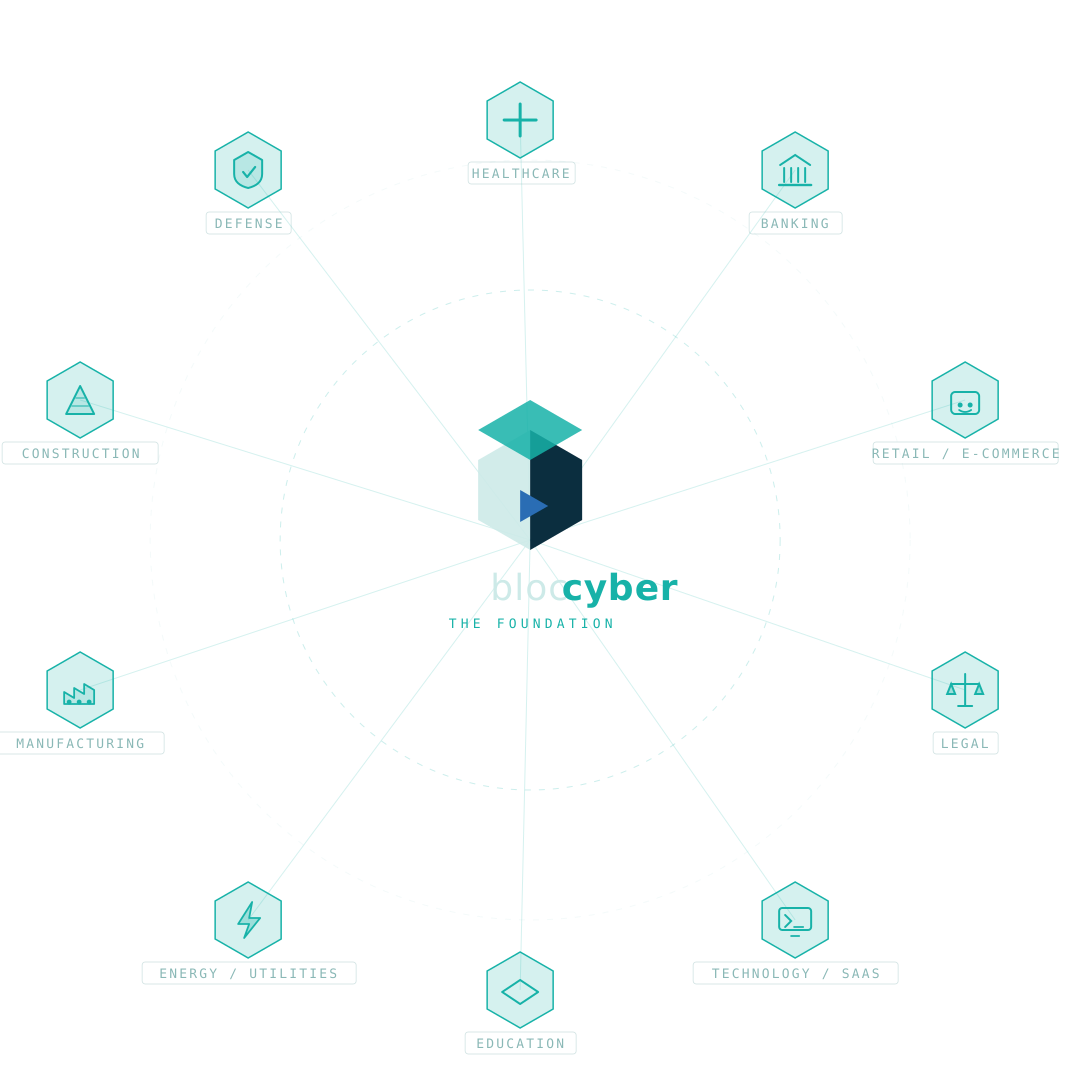
Industries We Protect
Cyber Coverage Built for Your Industry
Every industry faces a different cyber threat, from patient records in healthcare to wire fraud in construction. Bloc Cyber matches coverage to the risks your sector actually faces, drawing on specialty carriers that understand your business. Find your industry below to see how we protect it.
Healthcare
Banking
Retail / E-Commerce
Legal
Technology / SaaS
Education
Energy / Utilities
Manufacturing
Construction
Defense

Healthcare
HIPAA-grade protection for patient data
725
healthcare breaches disclosed in 2024
HIPAA-grade protection for patient data
▣ Ransomware on EHR systems
▣ PHI exfiltration
▣ Medical device exploits
▣ Business email compromise
Sub-sectors we place
Hospitals and health systems
Physician practices and specialty clinics
Dental practices and DSOs
Behavioral health and addiction treatment centers
Medical billing and revenue cycle management firms
Typical turnaround for indication of terms: 1 business day.

Banking
Coverage that meets FFIEC and NYDFS expectations
$5.9M
average cost of a financial sector breach
Common threats we underwrite against
▣ Wire fraud and BEC
▣ Credential stuffing
▣ Third-party vendor risk
▣ Ransomware
Sub-sectors we place
Community banks
Credit unions
Mortgage lenders and loan originators
Wealth management and RIAs
Payment processors and merchant acquirers
Typical turnaround for indication of terms: 1 business day.

Retail / E-Commerce
PCI-DSS aligned coverage for every checkout
42%
of retailers hit by ransomware in the last year
Common threats we underwrite against
▣ Magecart / card skimming
▣ POS malware
▣ Account takeover
▣ Supply-chain intrusion
Sub-sectors we place
Direct-to-consumer (DTC) brands
Shopify and marketplace sellers
Brick-and-mortar multi-location retailers
Restaurants and QSR franchises
Grocery and specialty food retail
Typical turnaround for indication of terms: 1 business day.

Legal
Privilege, client files, and trust-account safeguards
1 in 4
law firms reported a breach in 2024
Common threats we underwrite against
▣ Wire-transfer fraud
▣ Privileged data theft
▣ Email account compromise
▣ Ransomware
Sub-sectors we place
AmLaw / large firms
Boutique litigation firms
Personal injury and plaintiffs’ firms
Estate planning and trust attorneys
Title and real estate closing firms
Typical turnaround for indication of terms: 1 business day.

Technology / SaaS
SOC 2 and ISO-aligned risk transfer
$4.88M
avg. cost of a SaaS breach in 2024
Common threats we underwrite against
▣ Supply-chain attacks
▣ Cloud misconfiguration
▣ Token and key theft
▣ Zero-day exploits
Sub-sectors we place
B2B SaaS platforms
Managed service providers (MSPs) and MSSPs
Fintech startups
AI and machine learning companies
Cloud hosting and infrastructure providers
Typical turnaround for indication of terms: 1 business day.

Education
FERPA-aligned coverage for student and research data
80%
of K–12 districts hit by ransomware since 2022
Common threats we underwrite against
▣ Ransomware on district networks
▣ Student PII theft
▣ Fake invoice fraud
▣ DDoS on exam platforms
Sub-sectors we place
K-12 public school districts
Private and charter schools
Colleges and universities
EdTech platforms
Tutoring, test prep, and online learning providers
Typical turnaround for indication of terms: 1 business day.

Energy / Utilities
OT and IT coverage for critical infrastructure
24/7
operational-tech monitoring requirements
Common threats we underwrite against
▣ ICS/SCADA intrusion
▣ Nation-state actors
▣ Ransomware on OT
▣ Insider threat
Sub-sectors we place
Municipal utilities (water, electric, gas)
Oil and gas operators
Pipeline and midstream companies
Renewable energy (solar, wind) developers
Electric cooperatives and rural utilities
Typical turnaround for indication of terms: 1 business day.

Manufacturing
Business interruption protection for connected plants
25%
of all ransomware attacks target manufacturing
Common threats we underwrite against
▣ Ransomware halting production
▣ IP theft
▣ ICS exploits
▣ Vendor compromise
Sub-sectors we place
Industrial and heavy equipment manufacturers
Food and beverage processing
Pharmaceutical and medical device manufacturers
Automotive and parts suppliers
Aerospace component manufacturers
Typical turnaround for indication of terms: 1 business day.

Construction
Protection for project files, wires, and jobsite tech
$200K+
average wire-fraud loss in construction
Common threats we underwrite against
▣ Wire-transfer diversion
▣ BEC on project payments
▣ Stolen bid data
▣ Ransomware
Sub-sectors we place
General contractors
Commercial HVAC, electrical, and plumbing subs
Civil and infrastructure contractors
Homebuilders and residential developers
Architecture and engineering (A&E) firms
Typical turnaround for indication of terms: 1 business day.

Defense
CMMC, DFARS, and CUI-compliant risk transfer
CMMC
2.0 compliance required by 2026
Common threats we underwrite against
▣ CUI exfiltration
▣ Nation-state APTs
▣ Supply-chain compromise
▣ Cleared-personnel targeting
Sub-sectors we place
DoD prime contractors
CMMC-regulated subcontractors
Defense software and systems integrators
Aerospace and satellite contractors
Federal IT and cleared staffing firms
Typical turnaround for indication of terms: 1 business day.
The Bloc system
One foundation.
Ten industry-specific builds.
The Bloc mark is built from stackable planes — each one a different angle on the same core structure. That’s how we place coverage: one underwriting discipline, tuned and re-tuned for every industry we serve.
Coverage
A policy you can actually read.
Structured in three clean blocs.
01
First-Party
Your direct losses when an incident hits your business.
✓
Incident response & forensics
✓
Business interruption
✓ Data restoration
✓ Cyber extortion / ransomware
✓ Funds transfer fraud
✓ Reputational harm
02
Third-Party
Your liability to clients, partners, and regulators.
✓
Network security liability
✓
Privacy liability (HIPAA, GDPR, state laws)
✓ Regulatory defense & fines
✓ PCI-DSS fines and assessments
✓ Media liability
✓ Breach notification costs
03
Specialty
Advanced coverages for complex risks and contracts.
✓
Technology E&O
✓
Social engineering fraud
✓ Contingent business interruption
✓ Systems failure
✓ Bricking & hardware replacement
✓ CMMC / regulatory-specific endorsements
Typical limits placed
$1M / $1M starter
$5M / $10M mid-market
$25M+ layered towers
Custom retentions
Common Questions
Cyber Liability Insurance, Explained
What does cyber insurance cover?
Cyber insurance covers the financial losses from a data breach or cyberattack. This includes breach response, legal fees, customer notification, ransomware, business interruption, and regulatory fines, depending on your policy.
Does my business really need cyber insurance?
Yes. Any business that stores customer data, processes payments, or relies on connected systems faces cyber risk. Small and mid-sized companies are frequent targets because they often have fewer defenses.
How much does cyber insurance cost?
Cost depends on your industry, revenue, data volume, and security practices. We market your risk to multiple carriers to find strong coverage at a competitive price. Request a quote for an exact figure.
What is the difference between first-party and third-party cyber coverage?
First-party coverage pays for your own losses, like data recovery and lost income. Third-party coverage pays for claims from others harmed by a breach on your systems.
How fast can I get a quote?
Most clients receive a quote in under 24 hours after we review the details of their business and exposure.
What should I do first after a cyberattack?
Contact us right away. We help you start breach response, connect you with forensic and legal support, and guide your claim so you contain the damage quickly.
Insights
Field notes from the placement desk.
What carriers are asking right now.



Start a quote
Tell us about your business.
We’ll come back with terms.
We’ll review your stack, your contracts, and your exposure — then place the program against the right markets. Most intakes get indicative terms back within one business day.
01
Quick intake
We only ask what the carriers actually need.
02
Benchmark
Side-by-side terms from 10+ specialty cyber carriers.
03
Bind
Plain-language policy review, e-signed and in force.