SPECIALTIES
Minnesota Technology Errors and Omissions Insurance
A Minneapolis SaaS company ships a platform update that corrupts a client's inventory data for three weeks. A St. Paul IT consultancy recommends a cloud migration path that results in $400,000 in unplanned downtime. A Duluth startup's custom-built application fails to meet contractual specifications, and the client sues for lost revenue. Each of these scenarios triggers a distinct category of technology errors and omissions claim, and each one exposes gaps that a standard general liability policy will not touch. Minnesota's tech sector has grown steadily across the Twin Cities and the Northland, and with that growth comes a rising volume of professional liability disputes tied to software performance, project delivery, and data handling. Tech E&O coverage exists specifically for these exposures, but the difference between a policy that responds and one that leaves you exposed often comes down to how the form was placed: which insuring agreements were selected, what sublimits apply, and whether the retention structure matches your actual risk profile. This guide breaks down failure-to-perform claims, negligent software development liability, coverage limits, and the policy details that matter for Minnesota technology firms.
Understanding Tech E&O in the Minnesota Market
Technology errors and omissions insurance covers financial losses your clients suffer because of a professional service failure, a product defect in your software, or negligent advice you provided. It is not a general business policy. It responds to claims alleging that your technology did not work as promised, that your professional guidance caused harm, or that your failure to deliver triggered financial damage.
Minnesota's regulatory environment adds a layer of complexity. The state's data privacy and breach-notification statutes impose specific obligations on technology vendors handling personal data, and a failure to comply can compound an E&O claim with regulatory defense costs. Your policy form needs to account for both the professional liability exposure and the regulatory tail that follows it.
Why St. Paul and Minneapolis Tech Hubs Need Specialized Coverage
The Twin Cities metro area houses a dense concentration of SaaS providers, managed service providers, fintech firms, and health tech companies. Many of these firms operate under master service agreements that require minimum E&O limits of $1 million or $2 million per occurrence. Without a policy that meets those thresholds, you cannot sign the contract.
St. Paul's growing health tech corridor and Minneapolis's fintech cluster both involve regulated client industries: healthcare and financial services. When your software touches regulated data, a performance failure does not just create a breach-of-contract claim. It can trigger regulatory investigations against your client, and those costs flow back to you through indemnification clauses. A policy form that excludes regulatory defense costs or sublimits them at $50,000 will not protect you in that scenario.
Comparison: General Liability vs. Technology E&O Insurance
| Feature | General Liability | Technology E&O |
|---|---|---|
| Bodily injury / property damage | Covered | Not covered |
| Failure to perform / deliver | Not covered | Covered (if insuring agreement includes it) |
| Negligent software design | Not covered | Covered |
| Breach of contract (tech services) | Not covered | May be covered depending on form |
| Regulatory defense costs | Rarely covered | Often included or available by endorsement |
| Intellectual property infringement in your work product | Not covered | Covered under many forms |
| Third-party data loss from your product | Not covered | Covered (often paired with cyber liability) |
General liability responds to physical harm. Tech E&O responds to financial harm caused by your professional services or technology products. They are complementary, not interchangeable.

By: Caden Braly
Founder of Bloc Cyber Insurance
INDEX
Bloc Cyber and Its Licensed Producers Are Authorized to Place Cyber Coverage in All 50 U.S. States and The District of Columbia.
Cyber liability insurance covers the financial losses your business faces after a cyberattack or data breach. This page explains what the coverage includes, who needs it, what it costs, and how Bloc Cyber helps you get protected fast.
We start with a twenty-minute call to walk through your contracts, your draw process, your tech stack, and the last twelve months of attempted fraud. From there we go to market with ten-plus carriers, benchmark terms side-by-side, and present the options in plain language with recommended limits and retentions. Most intakes get indicative terms within one business day.
Failure-to-Perform and Negligent Development Risks
Failure-to-perform claims and negligent development claims overlap, but they carry different legal theories. A failure-to-perform claim typically arises from breach of contract: you promised a deliverable, and the deliverable did not arrive on time, did not meet specifications, or did not function as warranted. A negligent development claim rests on a tort theory: you failed to exercise reasonable professional care in designing, coding, testing, or deploying software.
Both claim types are subject to Minnesota's statute of limitations framework, which generally allows six years for breach of contract and six years for most negligence actions. That long tail means a policy written on a claims-made basis needs to account for extended reporting periods, especially if you are switching carriers or winding down a product line.
Common Triggers for Failure-to-Perform Claims
- A missed go-live date that causes a client to lose revenue during a critical business period
- Software that does not integrate with the client's existing systems as specified in the statement of work
- A platform migration that results in data loss or extended downtime beyond the agreed-upon window
- Failure to deliver contractually required security features, exposing the client to a breach
Each of these triggers produces a demand for damages tied to the client's financial loss. The claim hits your E&O policy, not your general liability policy, because no physical property was damaged and no one was physically injured.
Liability in Custom Software Development Projects
Custom development projects carry heightened E&O exposure because the scope of work is specific, the deliverables are measurable, and the client's expectations are documented in a contract. When a project fails, the client has a paper trail showing exactly what was promised and what was not delivered.
Agile development methodologies can complicate this. If requirements shift mid-project and change orders are not documented, both parties may dispute what the final deliverable was supposed to include. Your E&O policy form may respond to the defense costs, but the insurer will scrutinize whether the claim falls within the policy's definition of "professional services" or "technology services." A form that narrowly defines these terms can leave gaps. Bloc Cyber's approach to placement involves reviewing these definitions at the insuring-agreement level before binding, so you know whether your actual work fits within the coverage grant.

We start with a twenty-minute call to walk through your contracts, your draw process, your tech stack, and the last twelve months of attempted fraud. From there we go to market with ten-plus carriers, benchmark terms side-by-side, and present the options in plain language with recommended limits and retentions. Most intakes get indicative terms within one business day.
Determining Coverage Limits for Minnesota Businesses
Selecting the right limit is not a guessing exercise. It is a function of your contract requirements, your client concentration risk, your annual revenue, and the regulatory environment you operate in.
Cyber and professional liability premiums saw an average decrease of 2.1% in the first quarter of 2025, and that softening trend has continued into 2026. For Minnesota tech firms, this means higher limits are more affordable than they were two years ago. That does not mean you should buy the minimum. It means you can likely secure adequate limits without the premium shock that characterized the hard market of 2022-2023.
Standard Limits for Duluth Startups vs. Twin Cities Enterprises
A Duluth startup with $500,000 in annual revenue and a handful of clients may find that a $1 million per claim / $1 million aggregate policy meets its immediate needs. The premium for a firm of that size typically falls between $1,000 and $5,000 annually, depending on the services offered and the claims history.
A Twin Cities enterprise with $10 million in revenue, 200 employees, and contracts with regulated financial institutions will likely need $5 million or more in limits. The retention structure matters just as much as the limit: a $25,000 retention may be manageable for a mid-market firm, but a $100,000 retention on a $2 million policy could leave you absorbing significant defense costs before the carrier pays anything. Minnesota's insurance regulatory framework does not mandate specific E&O limits for technology firms, so the market and your contracts dictate what you carry.
How Contractual Requirements Influence Your Policy Limits
Most enterprise clients and government contracts specify minimum E&O limits in their vendor agreements. A $2 million per occurrence / $4 million aggregate requirement is common for mid-market technology vendors serving healthcare or financial services clients in Minnesota.
Here is the catch: meeting the limit requirement on the declarations page is not enough. If the policy sublimits regulatory defense at $100,000, or if the definition of "technology services" excludes the specific work you perform under that contract, the coverage is illusory. You meet the contractual threshold on paper but not in practice. This is where form-level review matters. Bloc Cyber reads the actual policy language against your contract obligations before placement, identifying where the coverage grant stops and what that gap will cost you before a claim finds it.
We start with a twenty-minute call to walk through your contracts, your draw process, your tech stack, and the last twelve months of attempted fraud. From there we go to market with ten-plus carriers, benchmark terms side-by-side, and present the options in plain language with recommended limits and retentions. Most intakes get indicative terms within one business day.
| Coverage Element | Commercial General Liability | Cyber Insurance |
|---|---|---|
| Data breach notification costs | Not covered | Covered under first-party |
| Ransomware payment | Not covered | Covered (subject to sublimit) |
| Regulatory defense | Not covered | Covered under third-party |
| Business interruption from cyberattack | Not covered | Covered with waiting period |
| Funds transfer fraud | Not covered | Covered via cyber crime endorsement |
| Third-party lawsuit over data loss | Excluded or severely limited | Covered under third-party liability |
| Technology product failure | Not covered | Covered under Tech E&O |
Comparing Coverage Options and Policy Tiers
Not all tech E&O policies are structured the same way. Some carriers bundle E&O with cyber liability into a single form. Others offer standalone E&O with cyber available as an endorsement. The right structure depends on your exposure profile.
| Policy Tier | Typical Limit | Common Inclusions | Gaps to Watch |
|---|---|---|---|
| Entry-level | $500K - $1M | Professional services liability, defense costs within limits | May exclude IP infringement, regulatory defense, or technology products |
| Mid-market | $1M - $5M | Professional services, technology products, IP defense, some cyber coverage | Sublimits on regulatory proceedings, narrow definition of covered services |
| Enterprise | $5M - $10M+ | Broad professional and technology coverage, full cyber integration, worldwide territory | Retention levels may be high; excess layers may have different terms than primary |
The broader E&O and cyber insurance market has shifted toward bundled forms, but a bundled policy is not inherently superior to a standalone placement. What matters is whether each insuring agreement within the form matches your actual risk. A bundled form with a $25,000 sublimit on technology products liability is worse than a standalone E&O form with full limits on that same coverage.
We start with a twenty-minute call to walk through your contracts, your draw process, your tech stack, and the last twelve months of attempted fraud. From there we go to market with ten-plus carriers, benchmark terms side-by-side, and present the options in plain language with recommended limits and retentions. Most intakes get indicative terms within one business day.
Frequently Asked Questions About Tech Insurance
Does my general liability policy cover a client's claim that my software failed? No. General liability covers bodily injury and property damage. A claim alleging your software did not perform as promised is a professional liability exposure that requires a tech E&O policy.
How long do I have to report a claim under a claims-made E&O policy? You must report the claim during the policy period or within any extended reporting period you have purchased. Minnesota courts have enforced strict reporting requirements under claims-made policies, so late notice can void coverage.
Can I get tech E&O coverage if my company has fewer than 10 employees? Yes. Policies are available for firms of all sizes. Premiums for small firms are often lower, and the application process is straightforward.
What is the difference between "defense within limits" and "defense outside limits"? Defense within limits means your legal costs reduce your available policy limit. Defense outside limits means legal costs are paid separately, preserving the full limit for settlement or judgment. Defense outside limits is preferable but less common in E&O forms.
Do I need separate cyber liability coverage if I already have tech E&O? It depends on your policy form. Some tech E&O policies include first-party cyber coverage; others do not. If your form does not cover breach response costs, forensic investigation, or notification expenses, you need a separate cyber liability policy or an endorsement.
Is tech E&O insurance required by Minnesota law? No state statute mandates it. Your contracts, however, almost certainly do. Losing a contract because you cannot show proof of E&O coverage is a business risk, not a legal one.
We start with a twenty-minute call to walk through your contracts, your draw process, your tech stack, and the last twelve months of attempted fraud. From there we go to market with ten-plus carriers, benchmark terms side-by-side, and present the options in plain language with recommended limits and retentions. Most intakes get indicative terms within one business day.
| Coverage Element | Commercial General Liability | Cyber Insurance |
|---|---|---|
| Data breach notification costs | Not covered | Covered under first-party |
| Ransomware payment | Not covered | Covered (subject to sublimit) |
| Regulatory defense | Not covered | Covered under third-party |
| Business interruption from cyberattack | Not covered | Covered with waiting period |
| Funds transfer fraud | Not covered | Covered via cyber crime endorsement |
| Third-party lawsuit over data loss | Excluded or severely limited | Covered under third-party liability |
| Technology product failure | Not covered | Covered under Tech E&O |
How much does a typical cyber policy cost for a small business?
Costs vary based on your revenue and the type of data you store. Most small businesses can expect to pay between $500 and $2,000 per year for basic coverage.
It depends on your policy. Many standard policies require a specific "Cyber Crime" endorsement to cover losses from being tricked into sending money to a fraudster.
Does cyber insurance cover social engineering scams?
Cyber Liability covers data breaches and hacks. Tech E&O covers you if your technology product or service fails to work and causes a financial loss for your client.
Making the Right Choice for Your Firm
Minnesota technology firms face a specific set of professional liability exposures shaped by their client contracts, the regulatory environment, and the type of work they perform. A failure-to-perform claim against a Minneapolis SaaS company and a negligent development suit against a Duluth consultancy will each test different parts of the policy form. The question is whether your form was placed with those tests in mind.
Selecting a tech E&O policy is not about finding a low premium. It is about confirming that the insuring agreements, definitions, exclusions, sublimits, and retention structure align with your actual operations. A policy that looks adequate on the declarations page but fails at the coverage-grant level is worse than no policy at all, because it creates a false sense of security.
If you are purchasing or renewing a tech E&O policy for your Minnesota firm, consider having a specialist review the form with you before you bind. Knowing where the coverage stops is the single most valuable piece of information you can have before a claim arrives.
ABOUT THE AUTHOR
Caden Braly
— Founder, Bloc Cyber
I'm Caden Braly, founder of Bloc Cyber, the specialty cyber insurance arm of Braly Insurance. I built Bloc Cyber around one idea: businesses deserve coverage that actually responds when a cyberattack happens. I work closely with clients to understand their exposure, place the right policy through specialty carriers, and stand with them through the claim. My goal is simple — give every business straight answers and protection they can trust.
Full profile → caden@bloccyber.com LinkedIn
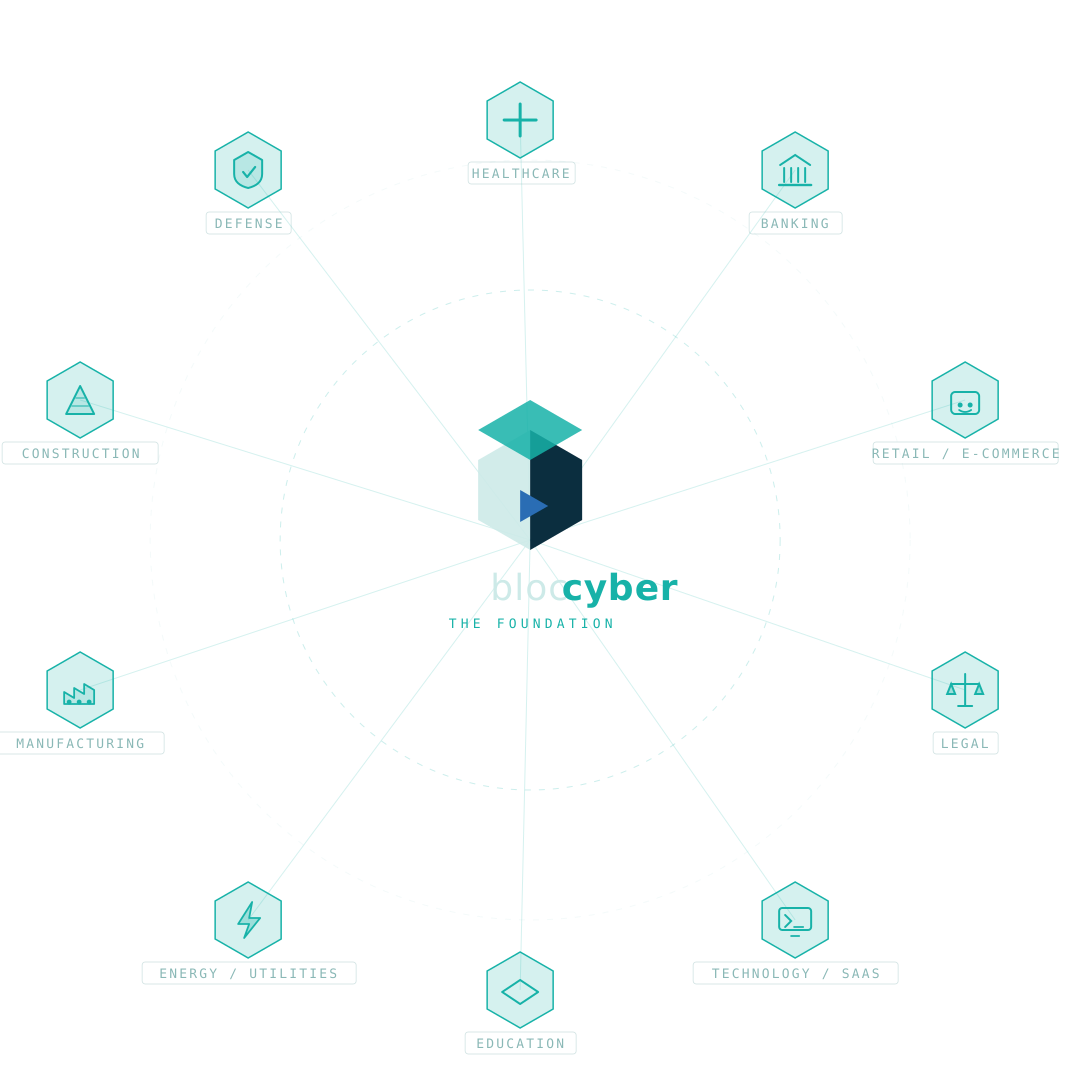
Industries We Protect
Cyber Coverage Built for Your Industry
Every industry faces a different cyber threat, from patient records in healthcare to wire fraud in construction. Bloc Cyber matches coverage to the risks your sector actually faces, drawing on specialty carriers that understand your business. Find your industry below to see how we protect it.
Healthcare
Banking
Retail / E-Commerce
Legal
Technology / SaaS
Education
Energy / Utilities
Manufacturing
Construction
Defense

Healthcare
HIPAA-grade protection for patient data
725
healthcare breaches disclosed in 2024
HIPAA-grade protection for patient data
▣ Ransomware on EHR systems
▣ PHI exfiltration
▣ Medical device exploits
▣ Business email compromise
Sub-sectors we place
Hospitals and health systems
Physician practices and specialty clinics
Dental practices and DSOs
Behavioral health and addiction treatment centers
Medical billing and revenue cycle management firms
Typical turnaround for indication of terms: 1 business day.

Banking
Coverage that meets FFIEC and NYDFS expectations
$5.9M
average cost of a financial sector breach
Common threats we underwrite against
▣ Wire fraud and BEC
▣ Credential stuffing
▣ Third-party vendor risk
▣ Ransomware
Sub-sectors we place
Community banks
Credit unions
Mortgage lenders and loan originators
Wealth management and RIAs
Payment processors and merchant acquirers
Typical turnaround for indication of terms: 1 business day.

Retail / E-Commerce
PCI-DSS aligned coverage for every checkout
42%
of retailers hit by ransomware in the last year
Common threats we underwrite against
▣ Magecart / card skimming
▣ POS malware
▣ Account takeover
▣ Supply-chain intrusion
Sub-sectors we place
Direct-to-consumer (DTC) brands
Shopify and marketplace sellers
Brick-and-mortar multi-location retailers
Restaurants and QSR franchises
Grocery and specialty food retail
Typical turnaround for indication of terms: 1 business day.

Legal
Privilege, client files, and trust-account safeguards
1 in 4
law firms reported a breach in 2024
Common threats we underwrite against
▣ Wire-transfer fraud
▣ Privileged data theft
▣ Email account compromise
▣ Ransomware
Sub-sectors we place
AmLaw / large firms
Boutique litigation firms
Personal injury and plaintiffs’ firms
Estate planning and trust attorneys
Title and real estate closing firms
Typical turnaround for indication of terms: 1 business day.

Technology / SaaS
SOC 2 and ISO-aligned risk transfer
$4.88M
avg. cost of a SaaS breach in 2024
Common threats we underwrite against
▣ Supply-chain attacks
▣ Cloud misconfiguration
▣ Token and key theft
▣ Zero-day exploits
Sub-sectors we place
B2B SaaS platforms
Managed service providers (MSPs) and MSSPs
Fintech startups
AI and machine learning companies
Cloud hosting and infrastructure providers
Typical turnaround for indication of terms: 1 business day.

Education
FERPA-aligned coverage for student and research data
80%
of K–12 districts hit by ransomware since 2022
Common threats we underwrite against
▣ Ransomware on district networks
▣ Student PII theft
▣ Fake invoice fraud
▣ DDoS on exam platforms
Sub-sectors we place
K-12 public school districts
Private and charter schools
Colleges and universities
EdTech platforms
Tutoring, test prep, and online learning providers
Typical turnaround for indication of terms: 1 business day.

Energy / Utilities
OT and IT coverage for critical infrastructure
24/7
operational-tech monitoring requirements
Common threats we underwrite against
▣ ICS/SCADA intrusion
▣ Nation-state actors
▣ Ransomware on OT
▣ Insider threat
Sub-sectors we place
Municipal utilities (water, electric, gas)
Oil and gas operators
Pipeline and midstream companies
Renewable energy (solar, wind) developers
Electric cooperatives and rural utilities
Typical turnaround for indication of terms: 1 business day.

Manufacturing
Business interruption protection for connected plants
25%
of all ransomware attacks target manufacturing
Common threats we underwrite against
▣ Ransomware halting production
▣ IP theft
▣ ICS exploits
▣ Vendor compromise
Sub-sectors we place
Industrial and heavy equipment manufacturers
Food and beverage processing
Pharmaceutical and medical device manufacturers
Automotive and parts suppliers
Aerospace component manufacturers
Typical turnaround for indication of terms: 1 business day.

Construction
Protection for project files, wires, and jobsite tech
$200K+
average wire-fraud loss in construction
Common threats we underwrite against
▣ Wire-transfer diversion
▣ BEC on project payments
▣ Stolen bid data
▣ Ransomware
Sub-sectors we place
General contractors
Commercial HVAC, electrical, and plumbing subs
Civil and infrastructure contractors
Homebuilders and residential developers
Architecture and engineering (A&E) firms
Typical turnaround for indication of terms: 1 business day.

Defense
CMMC, DFARS, and CUI-compliant risk transfer
CMMC
2.0 compliance required by 2026
Common threats we underwrite against
▣ CUI exfiltration
▣ Nation-state APTs
▣ Supply-chain compromise
▣ Cleared-personnel targeting
Sub-sectors we place
DoD prime contractors
CMMC-regulated subcontractors
Defense software and systems integrators
Aerospace and satellite contractors
Federal IT and cleared staffing firms
Typical turnaround for indication of terms: 1 business day.
The Bloc system
One foundation.
Ten industry-specific builds.
The Bloc mark is built from stackable planes — each one a different angle on the same core structure. That’s how we place coverage: one underwriting discipline, tuned and re-tuned for every industry we serve.
Coverage
A policy you can actually read.
Structured in three clean blocs.
01
First-Party
Your direct losses when an incident hits your business.
✓
Incident response & forensics
✓
Business interruption
✓ Data restoration
✓ Cyber extortion / ransomware
✓ Funds transfer fraud
✓ Reputational harm
02
Third-Party
Your liability to clients, partners, and regulators.
✓
Network security liability
✓
Privacy liability (HIPAA, GDPR, state laws)
✓ Regulatory defense & fines
✓ PCI-DSS fines and assessments
✓ Media liability
✓ Breach notification costs
03
Specialty
Advanced coverages for complex risks and contracts.
✓
Technology E&O
✓
Social engineering fraud
✓ Contingent business interruption
✓ Systems failure
✓ Bricking & hardware replacement
✓ CMMC / regulatory-specific endorsements
Typical limits placed
$1M / $1M starter
$5M / $10M mid-market
$25M+ layered towers
Custom retentions
Common Questions
Cyber Liability Insurance, Explained
What does cyber insurance cover?
Cyber insurance covers the financial losses from a data breach or cyberattack. This includes breach response, legal fees, customer notification, ransomware, business interruption, and regulatory fines, depending on your policy.
Does my business really need cyber insurance?
Yes. Any business that stores customer data, processes payments, or relies on connected systems faces cyber risk. Small and mid-sized companies are frequent targets because they often have fewer defenses.
How much does cyber insurance cost?
Cost depends on your industry, revenue, data volume, and security practices. We market your risk to multiple carriers to find strong coverage at a competitive price. Request a quote for an exact figure.
What is the difference between first-party and third-party cyber coverage?
First-party coverage pays for your own losses, like data recovery and lost income. Third-party coverage pays for claims from others harmed by a breach on your systems.
How fast can I get a quote?
Most clients receive a quote in under 24 hours after we review the details of their business and exposure.
What should I do first after a cyberattack?
Contact us right away. We help you start breach response, connect you with forensic and legal support, and guide your claim so you contain the damage quickly.
Insights
Field notes from the placement desk.
What carriers are asking right now.



Start a quote
Tell us about your business.
We’ll come back with terms.
We’ll review your stack, your contracts, and your exposure — then place the program against the right markets. Most intakes get indicative terms back within one business day.
01
Quick intake
We only ask what the carriers actually need.
02
Benchmark
Side-by-side terms from 10+ specialty cyber carriers.
03
Bind
Plain-language policy review, e-signed and in force.